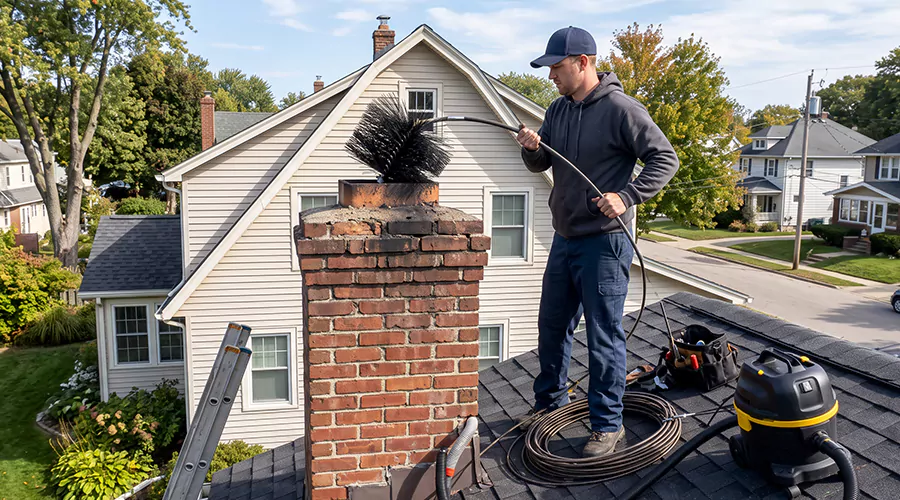
How Often Should a Chimney Be Cleaned?
Find out when to schedule chimney cleaning for wood, gas, and pellet systems, and which warning signs mean buildup has reached a risky level.




Based on 500+ Reviews

Proudly American
Owned & Operated

A chimney should generally be cleaned when there is a significant buildup of soot, creosote, or debris that can affect fireplace performance and safe operation. For many homeowners, this means cleaning the chimney at least once a year, especially when a wood-burning fireplace is used regularly. If a new or replacement fireplace is needed, fireplace installation can provide a suitable setup based on the home's heating needs and chimney system.
The exact cleaning schedule depends on several factors, including the type of fuel burned, how often the fireplace is used, the type of appliance, and the amount of buildup inside the chimney.
Regular chimney cleaning helps remove combustible deposits, maintain proper airflow, and identify problems before they become more serious.
During fireplace operation, smoke and combustion particles travel through the chimney. Over time, these materials can collect on the inside walls of the flue.
Wood-burning fireplaces can create:
If these deposits become excessive, they may affect chimney performance.
Regular chimney cleaning helps:
A chimney that appears to work normally may still have deposits accumulating inside.
For many homes, a chimney should be cleaned at least once a year or whenever buildup reaches a concerning level. If an older fireplace also shows signs of wear or damage, old fireplace repair may be needed to keep the fireplace safe and functional.
The ideal cleaning schedule depends on usage.
| Fireplace Usage | Recommended Cleaning Frequency |
|---|---|
| Frequent wood-burning use | Once a year or more often if needed |
| Occasional fireplace use | Inspect annually and clean when buildup is present |
| Rarely used fireplace | Inspect before use and clean if necessary |
| Gas fireplace | Clean and inspect based on condition and manufacturer guidance |
| Pellet stove | Regular cleaning based on usage and buildup |
Annual inspections help determine whether cleaning is actually needed.
Wood-burning fireplaces usually require the most frequent cleaning because burning wood creates smoke particles and creosote.
Cleaning may be needed:
Factors that increase cleaning needs include:
Dry, properly seasoned wood generally produces cleaner combustion compared with wet or unseasoned wood.
Gas fireplaces usually produce less soot and creosote than wood-burning systems, but they still require maintenance.
A gas fireplace vent system should be inspected regularly because problems can develop with:
Cleaning frequency depends on the fireplace type, usage, and manufacturer recommendations.
Even when there is little soot, inspections can help identify ventilation or component problems.
Pellet stoves produce ash and combustion residue that can collect inside the vent system.
Cleaning frequency depends on:
Pellet stove owners should follow the appliance maintenance instructions and monitor buildup regularly.
Several conditions influence how often a chimney needs cleaning.
Different fuels create different levels of residue.
| Fuel Type | Common Deposits |
|---|---|
| Wood | Creosote and soot |
| Pellet | Ash and fine particles |
| Gas | Limited soot but requires inspection |
| Oil | Soot and combustion residue |
Wood-burning systems generally require more frequent cleaning because they create more combustible deposits.
A fireplace used frequently produces more combustion material than one used occasionally.
Heavy use may require more frequent cleaning because deposits accumulate faster.
How a fireplace is operated affects buildup.
Practices that can increase deposits include:
A hot, properly managed fire usually creates cleaner combustion.
The chimney structure can also affect buildup.
Factors include:
Poor draft can allow more smoke particles to remain inside the chimney.
Several warning signs may indicate that cleaning is needed.
Look for:
If these signs appear, the chimney should be evaluated before continued use.
Skipping chimney cleaning allows deposits to continue building.
Possible problems include:
Heavy creosote buildup can also create additional concerns because creosote is combustible.
No. Annual inspection does not always mean annual cleaning.
A chimney inspection determines whether cleaning is necessary based on:
Some chimneys may require cleaning more frequently, while others may only need cleaning when deposits reach a certain level.
A typical chimney cleaning may include:
Cleaning removes deposits but does not repair damaged chimney components.
If problems such as cracks, leaks, or liner damage are discovered, additional repairs may be required.
Regular cleaning does not usually harm a chimney, but unnecessary cleanings may not provide additional benefits if there is little buildup.
The best approach is to combine regular inspections with cleaning based on actual chimney condition.
Homeowners can reduce buildup by:
Good fireplace practices help reduce soot and creosote formation.
A chimney should generally be cleaned when buildup of soot, creosote, or debris becomes significant. For many homeowners who use wood-burning fireplaces regularly, this means cleaning about once a year.
However, cleaning frequency depends on fireplace usage, fuel type, burning habits, and chimney condition. Annual inspections help determine whether cleaning is needed and identify other problems that may affect fireplace performance.
Regular chimney cleaning helps maintain airflow, remove harmful deposits, and keep the fireplace system operating properly.
Many chimneys should be cleaned about once a year, especially when used regularly. The exact schedule depends on buildup and usage.
Gas fireplaces usually produce less buildup but still require regular inspection and maintenance.
Signs include heavy soot, creosote buildup, smoke problems, strong odors, and reduced fireplace performance.
Some homeowners attempt DIY cleaning, but professional cleaning can help identify hidden problems and safely remove difficult buildup.
Yes. Chimney cleaning removes soot and creosote deposits from the flue.
A neglected chimney may develop excessive buildup, poor airflow, smoke problems, and increased maintenance concerns.
Find out when to schedule chimney cleaning for wood, gas, and pellet systems, and which warning signs mean buildup has reached a risky level.
